





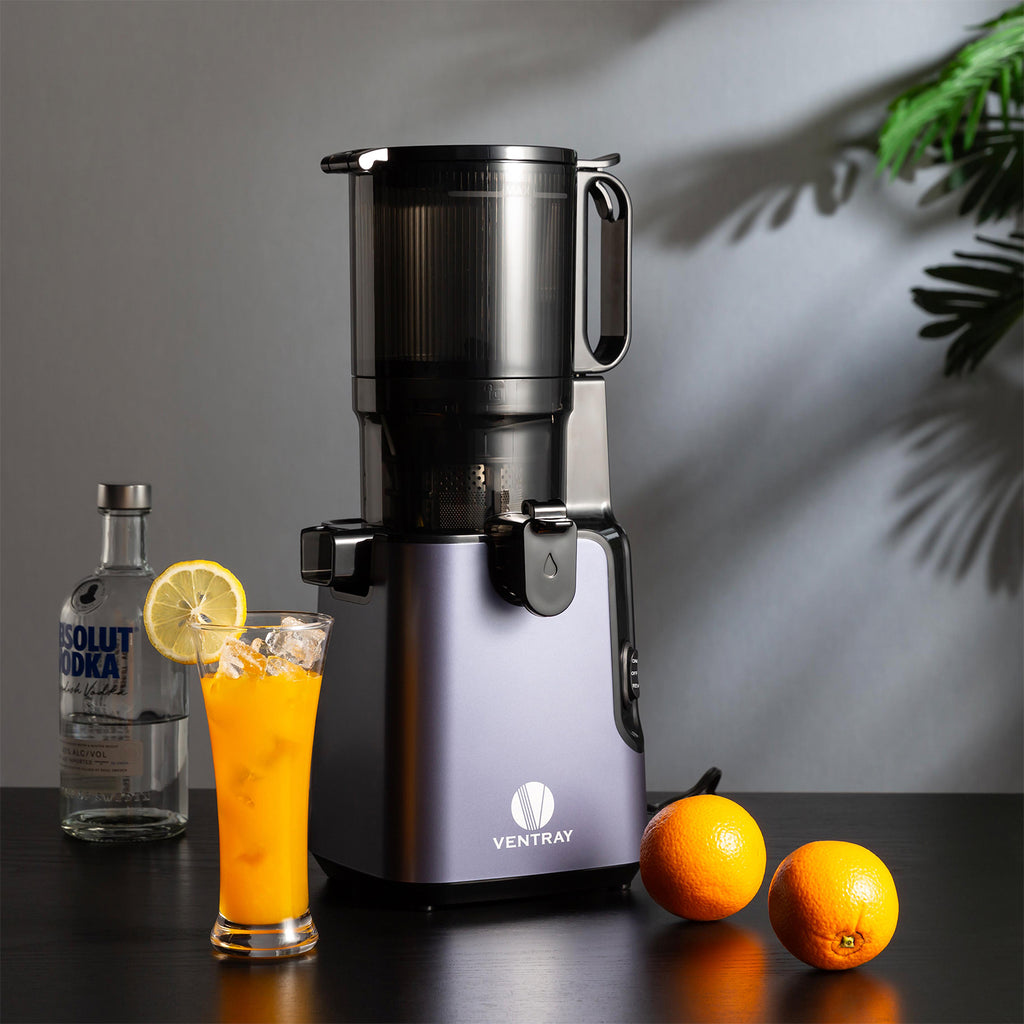
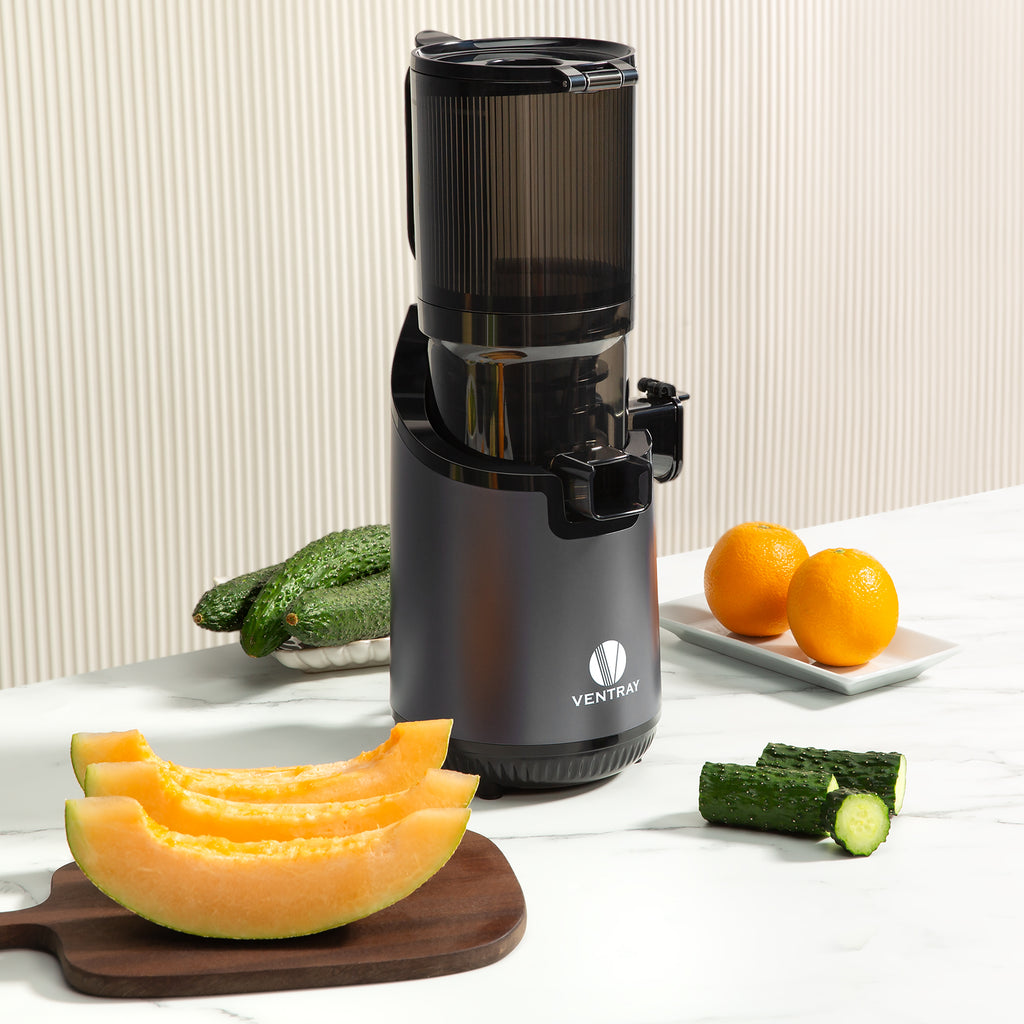
Why Slow Masticating Juicers Preserve More Nutrients
Juicing has moved from boutique juice bars to home kitchens, and many people now start their morning with fresh‑pressed fruits and vegetables. The appeal is obvious: whole‑food nutrition, a quick energy boost and a delicious way to sneak more produce into your diet. However, not all juices are created equal. High‑speed centrifugal machines shred produce at thousands of revolutions per minute, exposing it to heat and air that can degrade sensitive vitamins and phytochemicals. Slow masticating juicers, by contrast, crush fruits and vegetables at a gentle pace, squeezing out juice without significant heat build‑up. This difference matters when your goal is to maximize nutrients.
How juicers work: crushing vs. shredding
Masticating juicers (often called slow or cold‑press juicers) use an auger to crush and press produce. This process operates at 40–80 RPM—the Ventray Ginnie runs at 60 RPM—which minimizes friction and heat. Because of the deliberate grinding action, masticating juicers are particularly good at extracting juice from leafy greens, wheatgrass and fibrous vegetables. The slower speed also means little air is incorporated into the juice, reducing foam and oxidation.
Centrifugal juicers use a spinning metal disc with sharp teeth to shred produce at 6,000–12,000 RPM. The shredded pulp is flung against a mesh basket and centrifugal force separates juice from solids. This design produces juice quickly, but the high‑speed blades generate heat and draw air into the mixture, leading to foam, oxidation and a thinner juice.
Heat, oxygen and nutrient loss
Juice is rich in delicate vitamins, enzymes and phytochemicals. Vitamin C and polyphenols are especially vulnerable to heat and oxygen exposure. When juices are processed at high speed, friction raises the temperature and whipping action introduces air, accelerating oxidation. Ventray highlights that centrifugal juicers “generate heat, leading to the potential loss of valuable nutrients and enzymes”. Their slow juicer minimizes heat and uses a four‑stage squeezing auger and double filter to maximize extraction while leaving the pulp dry.
What does science say?
Research into nutrient retention has produced mixed results—some studies find significant differences between juicer types, while others show only modest variation. Key findings include:
Additional benefits of masticating juicers
Even when nutrient differences are modest, slow masticating juicers offer several practical advantages:
· Higher juice yield and less waste: Because the auger squeezes produce thoroughly, masticating juicers typically extract more juice and leave drier pulp.
· Better texture and mouthfeel: Juice from masticating machines is thicker, less foamy and more homogenous. The additional pulp means more soluble fiber, which can aid satiety and digestive health.
· Quiet operation and versatility: Slow juicers operate at low decibels and can handle leafy greens and wheatgrass better than high‑speed models.
· Longer shelf life: Although research is mixed, some evidence suggests that cold‑pressed juice retains color and clarity longer during refrigerated storage. Less oxidation may slow nutrient degradation.
Ventray’s approach: design meets wellness
Ventray positions its appliances as tools for healthier living, combining nutrient‑preserving technology with user‑friendly design. Ventray believes everyone should be able to pursue a healthy lifestyle and strives to design affordable, easy‑to‑use appliances to enhance cooking and living experiences. The Ginnie Cold Press Juicer reflects this ethos:
· Slow extraction for nutrient preservation: The Ginnie operates at 60 RPM, using a four‑stage squeezing auger to maximize juice yield and minimize heat. A double filter produces smooth juice while trapping excess pulp.
· Eco‑conscious and ethical manufacturing: Ventray highlights sustainable packaging, ethical manufacturing practices and a return program for recycling parts. These efforts align with a broader commitment to environmental responsibility.
· User‑centric design: The compact juicer assembles and cleans quickly. Ventray also offers a larger range of slow masticating models for different household needs.
Ventray’s focus on nutrient retention, sustainability and ease of use demonstrates how well‑designed appliances can support healthier lifestyles. By combining science‑based juicing technology with thoughtful design choices, the company provides tools that make it easier to adopt healthy habits.
Conclusion
Scientific studies show that slow masticating juicers often retain more antioxidant compounds, vitamin C and phytonutrients than high‑speed centrifugal models, particularly when juices are extracted from whole grapes or tomatoes and consumed soon after preparation. Other research finds little difference for certain fruit blends, reminding us that juicing is complex and nutrient retention depends on produce, juicer design and storage conditions. What is clear is that slow juicers offer superior juice yield, better texture and reduced oxidation, making them an excellent choice for health‑conscious households.
For brands like Ventray, slow masticating technology is more than a selling point—it’s part of a broader mission to help people live healthier lives. By combining gentle, nutrient‑preserving extraction, eco‑friendly practices and user‑friendly design, Ventray encourages consumers to enjoy fresh, nutritious juice at home. Whether you’re new to juicing or looking to upgrade, understanding how juicer technology affects nutrient retention can help you make informed choices—and Ventray’s well‑designed appliances are a compelling option for anyone seeking to squeeze more goodness out of every glass.